Cursor, the AI coding IDE built on top of Anthropic and OpenAI models, sold to SpaceX for $6...
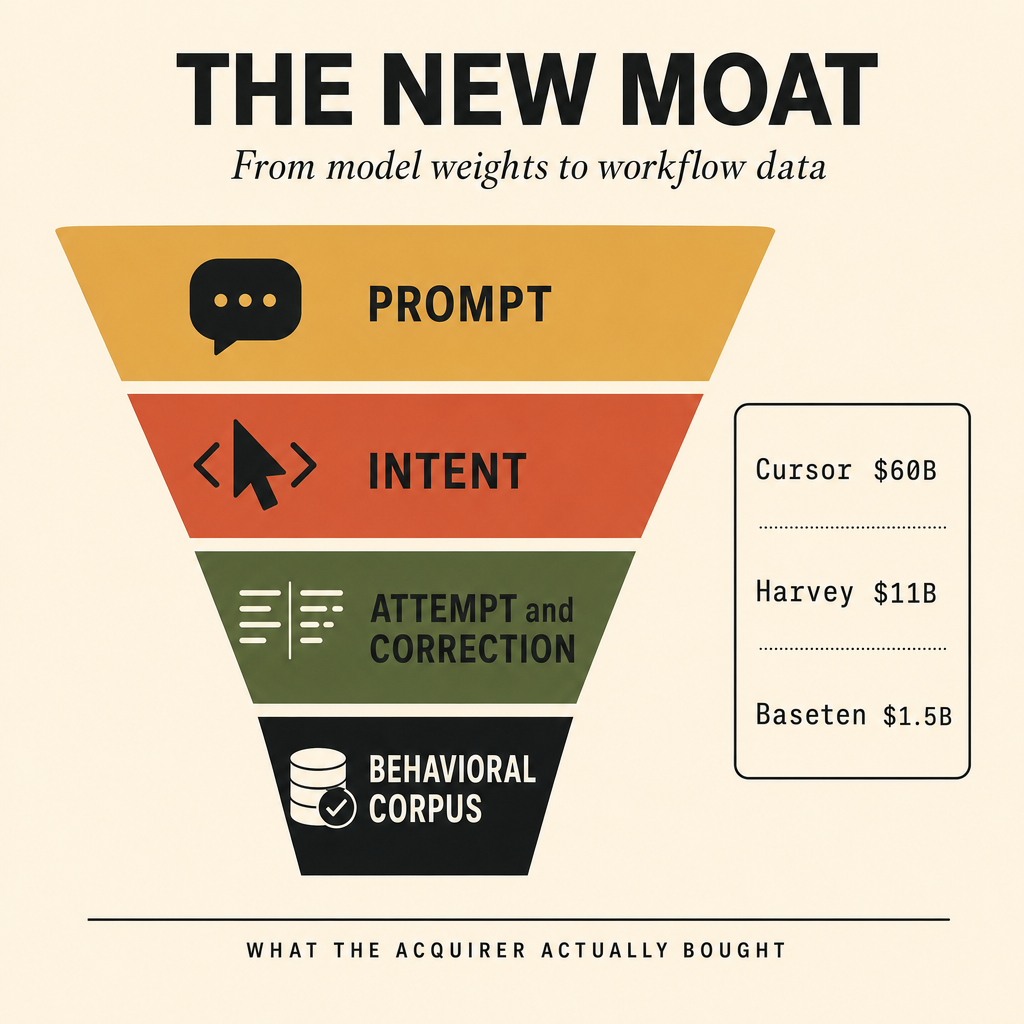
Cursor, the AI coding environment built on top of frontier models from Anthropic and OpenAI, sold to SpaceX this week for 60 billion dollars. The number is eye catching, but the more interesting question is what actually changed hands, because Cursor does not own a model and the acquirer already has access to every API it runs on.
Cursor ships an editor surface that sits between engineers and the models doing the work. Millions of coding sessions flow through it daily, and every one of them generates structured signal. An accepted completion, a rejected diff, the manual edit a developer makes after an agent run finishes, all of it is logged in context. That dataset is what 60 billion dollars actually bought. Not the software, not even the users in the conventional sense, but a continuously refreshed behavioral corpus on how working engineers correct AI output in production code. No foundation model lab has clean access to that loop, because the lab only sees the prompt and the response, not what the human did with the response afterward.
The same pattern is showing up across vertical applications. Harvey is building it for legal work at an 11 billion dollar valuation by capturing how attorneys edit drafted memos and contracts. Baseten just raised 1.5 billion as the serving infrastructure underneath this whole category, which tells you investors believe the application layer is where durable value accrues, not the model layer. The thesis is that frontier model quality keeps converging while workflow data stays proprietary to whoever owns the surface where the work happens.
For anyone building on top of foundation models, the practical implication is concrete. Your defensibility is a direct function of how much of the user's real workflow you observe and structure into events you can learn from. A thin chat wrapper sees prompts and nothing else, which means the model provider can replicate your product the moment they decide to. An IDE, or a legal drafting tool, or a clinical documentation system sees the full loop of intent, attempt, correction, and outcome. That is a feedback signal an API vendor cannot reconstruct from the outside.
What is worth watching from here is whether the major model labs respond by trying to own application surfaces directly, or whether they accept a layered market where applications keep the behavioral data and labs compete on raw capability. The Cursor sale price suggests acquirers are already pricing in the first scenario. If you are building in this space, the audit question to sit with is simple. If someone read your event logs tomorrow, what would they find that an API provider does not already have.
Originally posted on LinkedIn.