A startup called MicroAGI is offering free apartment cleanings in New York City, and the cat...
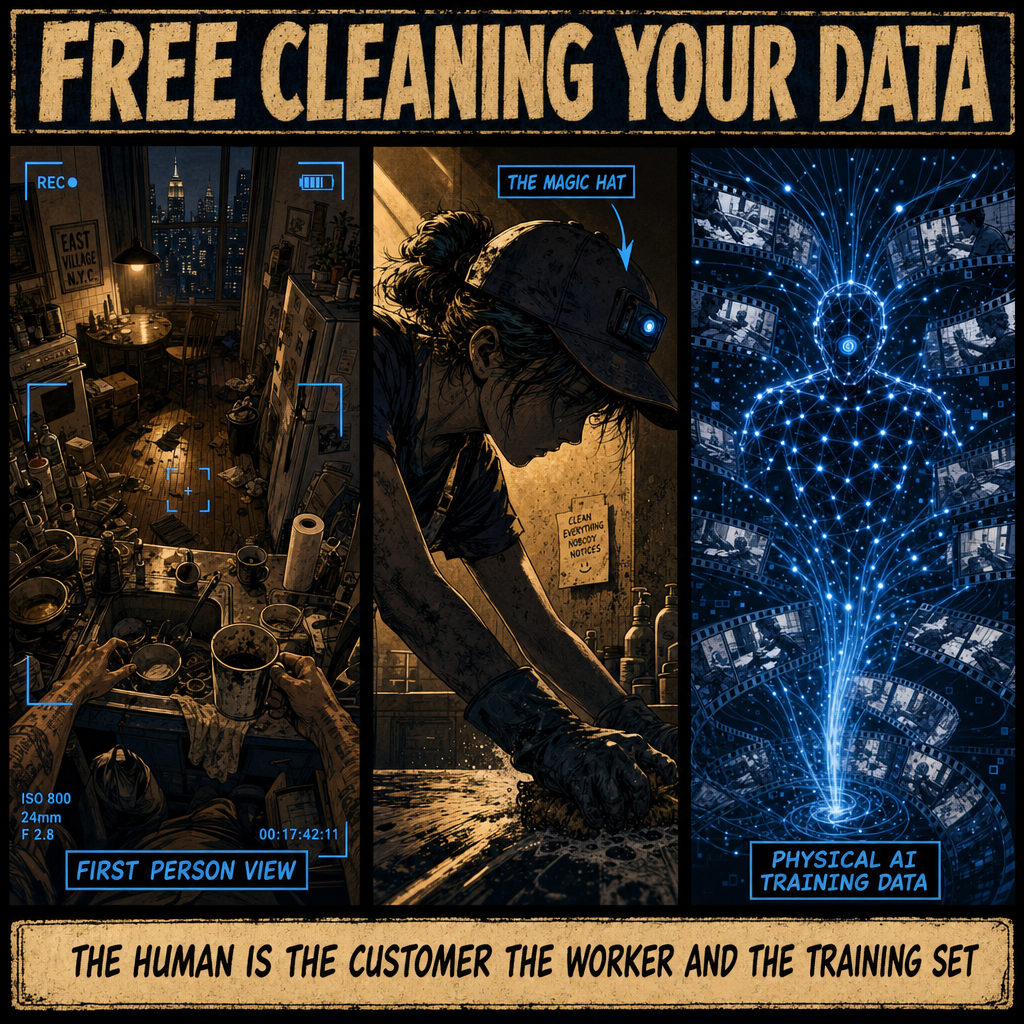
A startup called MicroAGI is running an experiment in New York City that turns apartment cleaning into a data collection pipeline. Through its Shift app, residents get a free two hour cleaning, and in exchange the company keeps the first person video footage of the entire job to train robotics and physical AI models.
The mechanics are straightforward. A vetted cleaner arrives wearing a head mounted camera that the company calls a magic hat. The roughly two hour session is filmed entirely from the cleaner's point of view, capturing how a human navigates a real home, picks up clutter, wipes counters, and handles the small decisions that fill any cleaning task. That footage is then routed to outside AI labs and to MicroAGI's own research team. The service is free because the data is worth more on the open market than the labor costs to produce it.
The reason this matters comes down to a specific bottleneck in robotics. Physical AI systems need high quality first person video of humans doing real tasks in real, messy environments, and that kind of data is genuinely scarce. A lab can simulate a kitchen in a thousand variations, but it cannot easily replicate the actual chaos of a lived in New York apartment, with its odd furniture layouts, mixed lighting, pet hair, and the small physical judgments a person makes without thinking. Companies building household robots and embodied agents will pay serious money for footage like this because it is the closest thing to ground truth they can get.
The structure of the deal is clever and a little unsettling. The human in the apartment is simultaneously the customer, the worker is the labor, and together they generate the training material for the system that may eventually do the job instead. It is a clean example of how the economics of AI training are starting to reshape ordinary services, with the value flowing from the data rather than the task itself.
This points to the next data frontier. The easy text on the web has been scraped, image datasets have been thoroughly mined, and synthetic data only goes so far for physical tasks. What labs need now is real world physical action captured at scale, and the most efficient way to get it appears to be subsidizing services that people already want. Expect more of these arrangements to appear in cooking, eldercare, home repair, and driving, where convenience becomes the price and your environment quietly becomes the product. The interesting question is not whether this model works, but how transparent the trade will be once it spreads beyond early adopters who already know what they are signing up for.
Originally posted on LinkedIn.