Andrej Karpathy just joined Anthropic, and the move tells you everything about where the fro...
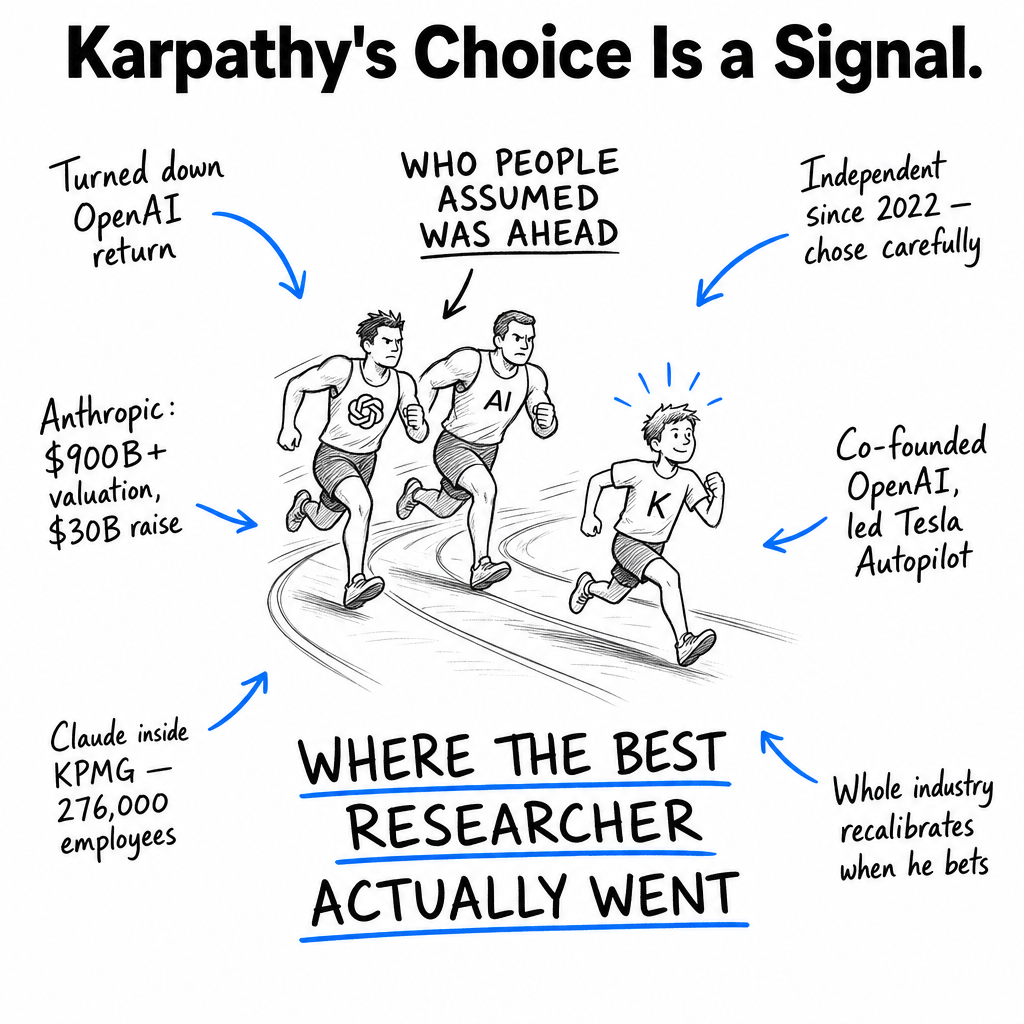
Andrej Karpathy has joined Anthropic to lead frontier research, and the move says more about the current state of AI labs than any earnings call could. When a researcher of his stature picks a team after years of independence, the rest of the industry pays attention to what that choice implies about where the real technical work is happening.
Karpathy is one of the most respected names in the field. He cofounded OpenAI, led the Autopilot team at Tesla, and coined the term "vibe coding" that has since become shorthand for a whole style of AI assisted development. He left OpenAI in 2022 and has spent the years since as an independent voice, publishing tutorials, building small open projects, and generally operating without a corporate banner. That independence is what makes the Anthropic decision interesting. He is not a researcher who needs a job. He has the credibility, the audience, and the resources to work on whatever he wants, and reports indicate he turned down a return to OpenAI before landing here.
The timing reinforces the signal. Anthropic recently closed in on a 30 billion dollar raise at a valuation north of 900 billion dollars, putting it firmly in the top tier of AI companies by capital. Claude is being deployed inside KPMG, an organization with a workforce of 276,000 people, which is the kind of enterprise footprint that used to belong almost exclusively to the older incumbents. The product side has been moving quickly too, with private sandboxes, MCP tunnels, and a batch of new enterprise features shipped just this week. Frontier research hires tend to follow infrastructure and distribution, and Anthropic now has both at a scale that makes ambitious work possible.
There is also a softer point worth making. Lab prestige in AI is not static. It moves with the people who choose to be there, and a single high profile decision can shift recruiting pipelines, partnership conversations, and even how policymakers read the landscape. The last time a researcher of Karpathy's stature made a visible bet on a particular lab, it reshaped expectations across the field for years.
The open question is what he is actually going to build. Anthropic has been public about its focus on safety, interpretability, and agentic systems, and Karpathy's own interests have leaned toward small, legible models and the teaching of how these systems work from the ground up. Whatever direction he takes, it is worth watching closely, because his choices have a habit of becoming the next year's conventional wisdom.
Originally posted on LinkedIn.